
For many years, sustainability in global supply chains was built largely on trust. Suppliers shared certifications, buyers reviewed documentation, and as long as quality and delivery were consistent, sustainability claims were rarely questioned in detail.
That is no longer the case. Today, sustainability is shifting from what companies say to what they can prove. And this shift is exposing a growing risk across global supply chains: greenwashing.

Greenwashing is often not intentional. In most cases, it happens because companies rely on incomplete or unverified information - outdated certifications, supplier declarations, or fragmented data spread across emails and spreadsheets.
The problem is that this approach no longer works in a market where buyers and regulators are demanding evidence, not statements.
European buyers, in particular, are now expected to understand the environmental and social impact of their entire supply chain, not just their direct suppliers. This means every claim must be backed by traceable, verifiable data.

What used to be a reputational concern is now becoming a business risk.
Buyers are asking more detailed questions about sourcing, compliance, and emissions. At the same time, EU regulations are tightening around sustainability reporting and transparency. As a result, any gap between what is claimed and what can be proven can quickly lead to lost trust.
In competitive markets, this often translates into lost contracts - not because of poor performance, but because of lack of proof.
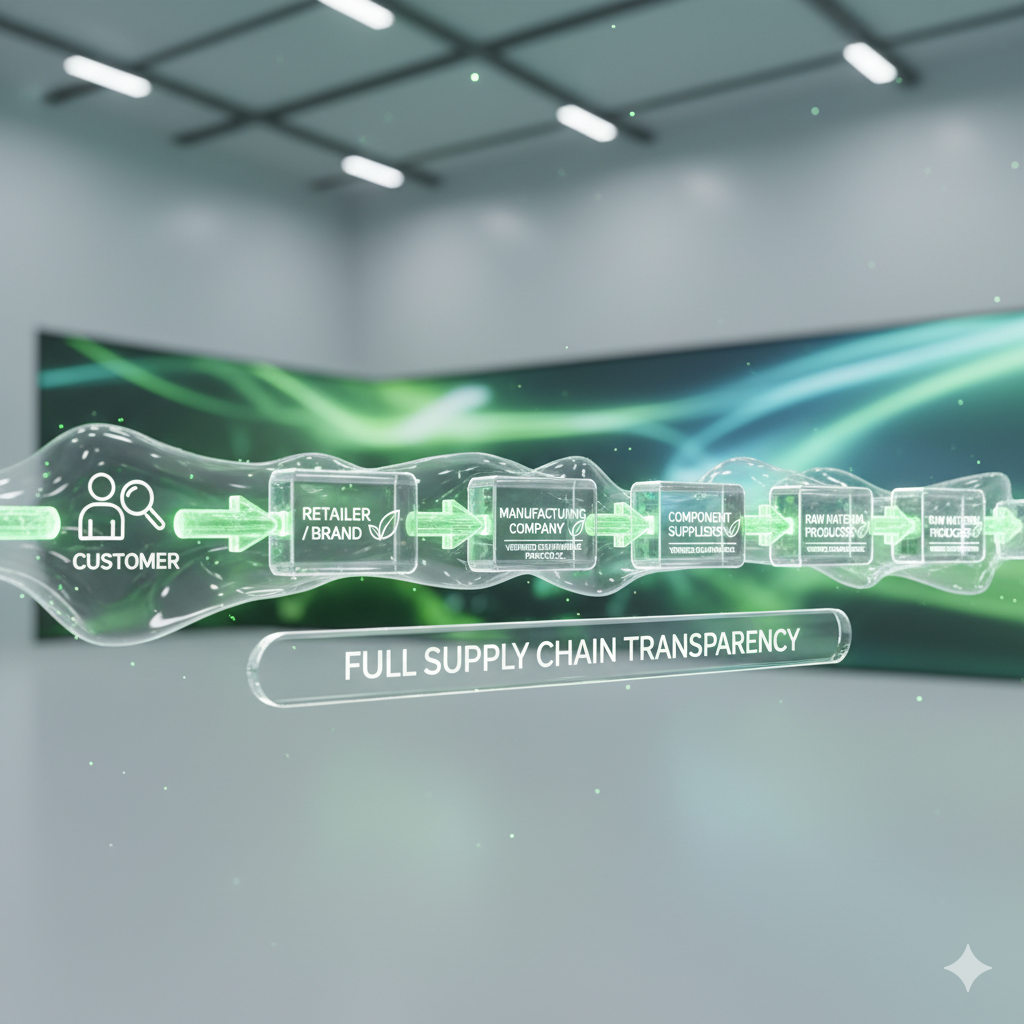
The main challenge is not intent, but structure. Many exporters still manage ESG and compliance information manually, with data scattered across different systems and teams. This makes it difficult to respond quickly or confidently when buyers request verification.
Another common issue is limited visibility beyond direct suppliers. Without understanding deeper levels of the supply chain, it becomes almost impossible to fully validate sustainability claims.

Avoiding greenwashing is not about adding more complexity - it’s about building clarity.
Companies that are able to centralize their ESG data, verify supplier information, and improve traceability across their supply chain are in a much stronger position. It allows them to respond to buyer requests with confidence and stay aligned with evolving EU expectations.
More importantly, it shifts sustainability from a reporting burden into a competitive advantage.
The global market is moving into a new phase where sustainability is no longer judged by intention, but by evidence.
For exporters, this means one thing: trust alone is no longer enough. The ability to prove your supply chain is becoming just as important as the supply chain itself.
Those who adapt early will not only reduce risk - they will stay relevant in a market that is becoming increasingly transparent by default.