
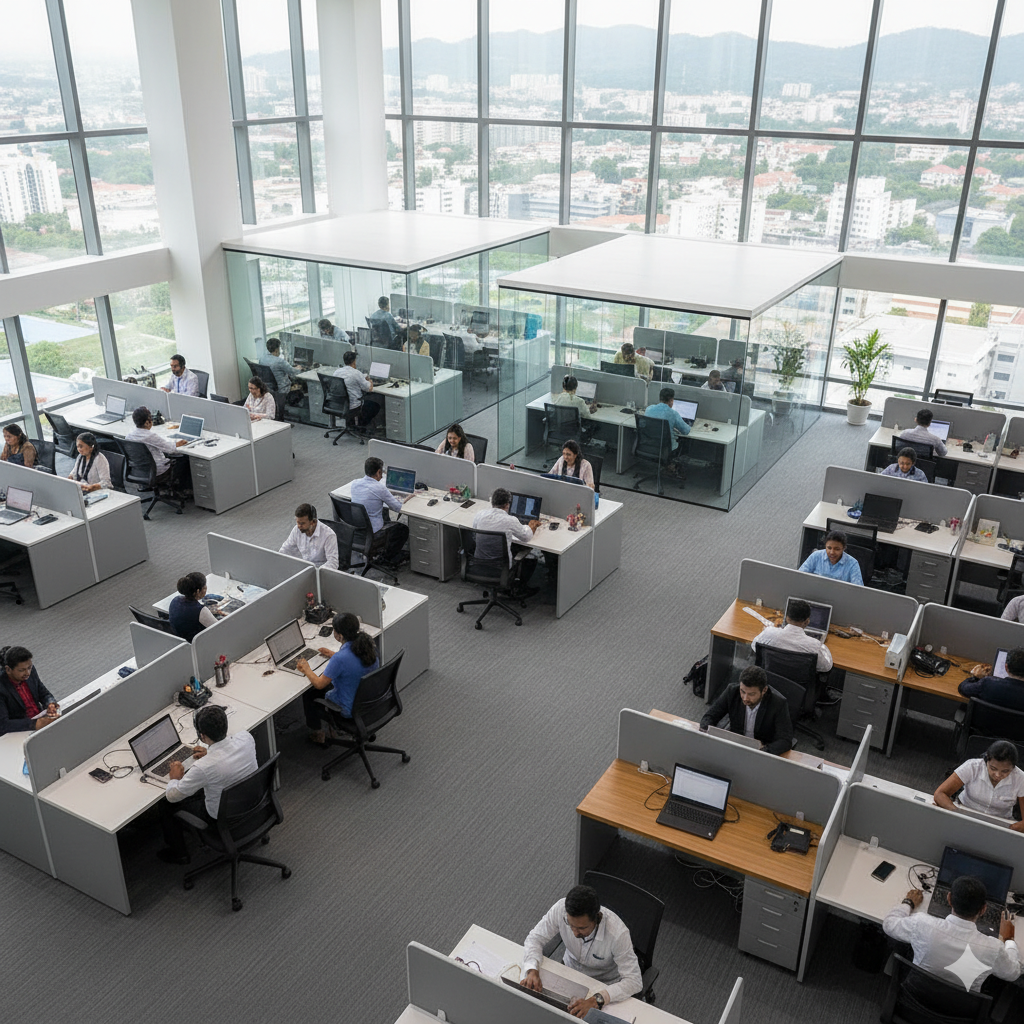
Today, most sustainability reporting still happens in silos.
One team collects data, another prepares reports, and another validates information at the end of the cycle - often under pressure and too late to fix inconsistencies. In that gap between teams and timing, something critical is lost: truth at the point where it is created. That is where greenwashing often begins - not always intentionally, but through disconnected systems, missing context, and fragmented responsibility.
So the real question is:
What if sustainability wasn’t just a reporting exercise, but a daily, collaborative process across the entire organization?
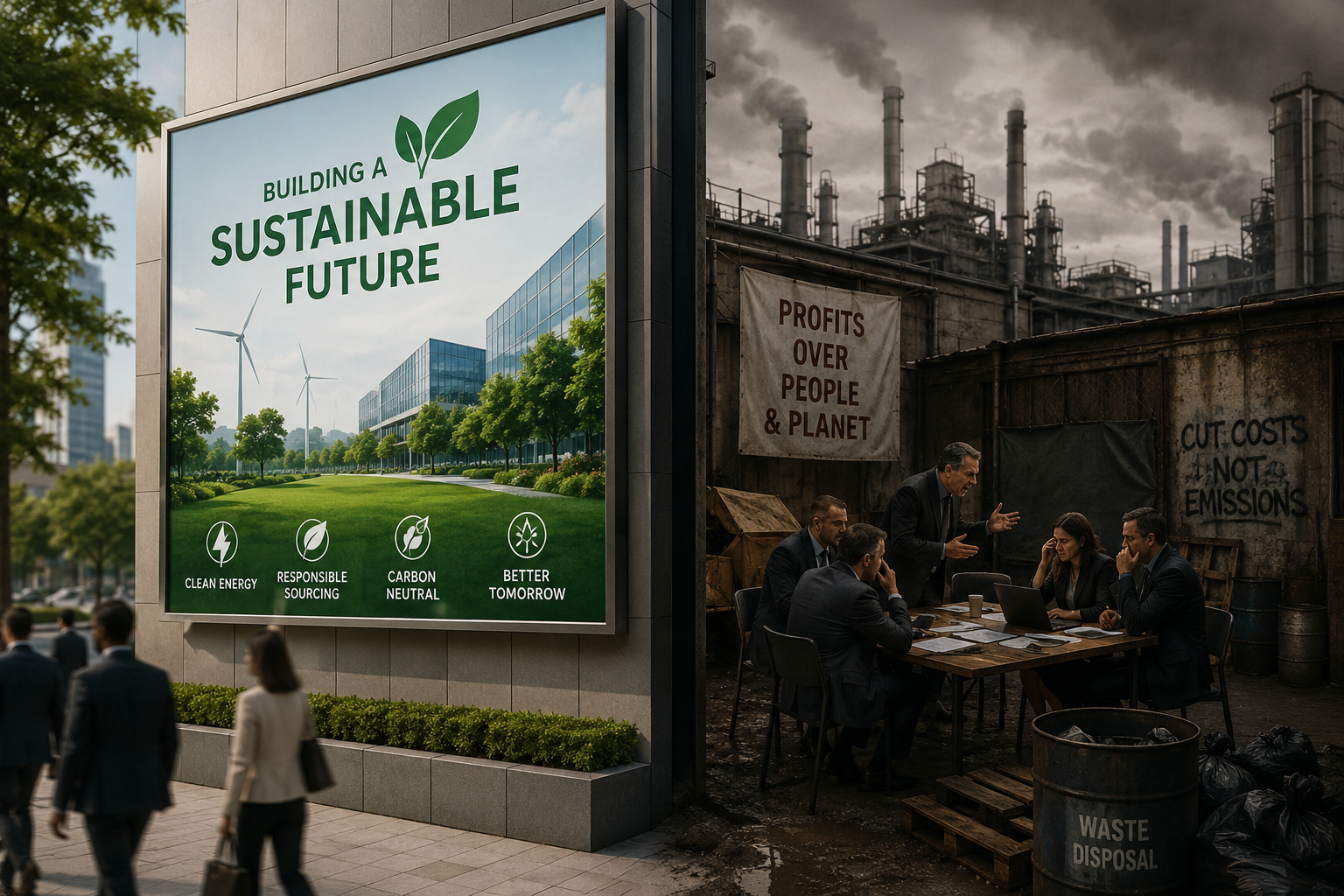
Procurement manages supplier data, operations track environmental metrics, and ESG teams compile reports, but these functions often work independently. Decisions are made without full visibility, assumptions fill data gaps, and sustainability becomes a year-end reporting exercise instead of a continuous process. In many cases, greenwashing stems not from false claims, but from incomplete or unverified information.
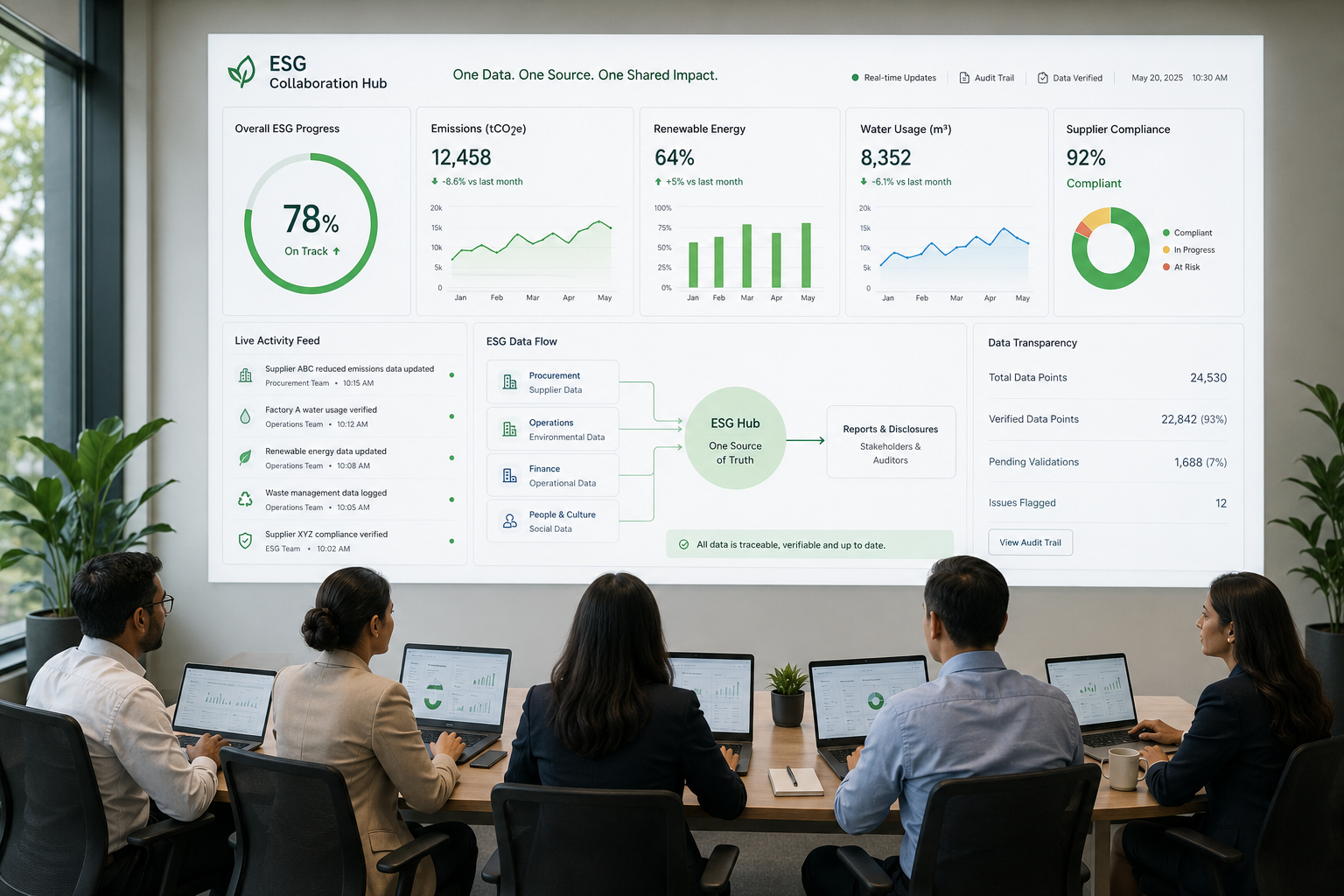
Now imagine a different approach: a shared digital environment where sustainability is embedded into everyday workflows. Procurement teams update supplier information in real time, operations log environmental data as activities happen, and ESG teams continuously validate information instead of rebuilding it months later. Auditors and stakeholders can access the same underlying data, improving transparency at every stage.

A collaborative ESG system does more than improve efficiency - it builds trust. Every data point can be traced back to its source, inconsistencies are identified early, and teams work from one shared version of truth instead of fragmented files and assumptions. Transparency is no longer created at the end of the reporting cycle; it becomes part of the process itself.
This matters now more than ever. With increasing regulations, more complex supply chains, and growing stakeholder expectations, companies are under pressure to prove - not just declare - their sustainability performance. Trust is becoming harder to earn and easier to lose, shifting the focus from better reporting to better systems of collaboration and verification.
Greenwashing is rarely just a reporting issue. It is a visibility issue, a coordination issue, and ultimately, a systems issue.
So the question becomes:
How do we design systems where greenwashing becomes harder to produce in the first place?
The answer begins with collaboration - every day, across every team, in one shared system.